
Have you experienced an Internet blackout? Such incidence might occur when a city is hit by natural disaster or facing cyberattack. The outage of Internet service experienced by the people of Myanmar recently did not happen because of any such reasons above however, but about politics.
In this episode, Edmon Chung, the CEO of DotAsia Organisation, and Angela Arkandhi, NetMission ambassador — a university student from Indonesia who is passionate about Internet governance and digital policy — are going to explore how the Internet shutdown refrains us from exercising our rights. What are the compromises between tackling the dissemination of false information and ensuring freedom of speech online? Is Internet shutdown not an open-air prison for those who are experiencing it?
“I believe, digital mobility has become a human right, and there is little justification for governments to be limiting it.”

Angela:
How does the Internet shutdown refrain people from exercising their rights?

Edmon:
The current situation in Myanmar is quite concerning and with the mixing in of fake news it is difficult to discern what is actually happening, which is the motivation of such fake news in the first place. That is why I believe the an open Internet itself is so important because the more information from the people on the ground, the closer we can get to the truth. The idea of Internet shutdowns are not only just concerning due to the curtailing of freedom of expression online, it can also increasingly involve the malfunctioning of life-sustaining devices or their related systems that are Internet-dependent.
Angela:
Do you perceive internet shutdowns the same as an open-air prison?
Edmon:
I believe, digital mobility has become a human right, and there is little justification for governments to be limiting it. The concept is very interesting indeed, and yes, it seems appropriate to understand an Internet shutdown as similar to an open air-prison, especially in times such as right now with the pandemic where physical mobility itself is already limited and many people are depending on digital mobility for their everyday lives. Under COVID lockdown conditions, everything is done online and taken into the digital world, even ordering food could becoming challenging if an Internet blackout simultaneously hits. This would essentially be the same as taking away one’s freedom for procuring their daily necessities.
Angela:
What is the compromise between controlling the Internet to prevent false information and providing freedom to the information?
Edmon:
When it comes to the correlation between the idea of Internet blackout and human rights and how shutting down the Internet refrains people from expressing their rights, it splits into two areas: one is right to access, and the other is freedom of expression. The right to access I believe constitutes part of fundamental rights, meaning that an Internet shutdown violates a person’s ability to move about online. A physical world comparison would be as if you are blocking all the roads, making people unable to move around. But the issue of freedom of expression is more tricky because if only a specific platform such as Facebook is blocked, that does not mean Internet access is entirely shut down; that is a hugely different issue.
Angela:
With that statement, would it mean that the idea of freedom of expression itself depends on the limitation set on its definition?
Edmon:
Yes. The idea of violation of freedom of expression depends on the limitation society sets towards the definition of “freedom of expression” itself and the different platforms used (online and offline). But the thing is, when it’s a fundamental right it should be able to be applicable to anyone both offline and online. Freedom of expression is always going to be relative and limited on both platforms. There are always going to be boundaries but such boundaries may be more easily identified offline. It becomes a much more complex concept when we talk about freedom of expression online. The problem with online is that the concept of time and space changes substantially. On the Internet, in an instant we can spread information all around the world. In an act of incitement of violence in the offline world, it would be confined to a specific time and space where the immediate result can be witnessed and proportionately attributed. In the online world however, time and space in that sense becomes an absurd concept in that time-space is both completely collapsed, and limitlessly lengthened at the same time. In an instant, you can upload video or live streaming online where viewers across the world can immediately respond to your post without minding when or where the video came from. Equally a post may be inciting responses days, months, years after it was originally produced, regardless of the context for which it was published in the first place.
Angela:
Since time and space does impact the way information flows on the Internet, would it be possible to control it?
Edmon:
Controlling time and space sounds like something from a sci-fi movie, but what we can do is to add useful contextual information regarding content shared over the Internet. I also believe that if we place more efforts into developing end-to-end encryption and expirable consent processes, it may actually be possible to better retain control of our own posts and data that is sent onto the Internet, it may require many players to come together and agree on open standards, and might be a long process, but it is possible. Meanwhile, I think we can try to find a reasonable compromise to avoid excessive control over the Internet while at the same time preventing and/or reducing harm brought by false information so that we can ensure as broad as appropriate freedom of expression online. For example, adding disclaimers and tagging content may be a useful option.
Angela:
What can be the suggestive measures for tackling Internet Shutdowns?
Edmon:
I believe there can be concrete ways to try to tackle Internet shutdowns, or more specifically to advocate against any shutdowns. On the government side, the starting point must be from identifying the problems at hand and understanding the urgency and aim of any shutdowns. The solution should involve discussion between relevant parties in a multi-stakeholder model, for example, utilising IGF events as a platform to air these ideas and identify approaches that addresses broad security concerns without a complete shutdown that would cripple the Internet’s critical infrastructure function for people. On the resistance side, creating community networks, VPN proxy and tunnelling options, and broader cybersecurity training would help prepare for and minimize undesired interruptions in the face of Internet shutdown situations.
This.Is.Asia Newsletter Issues
No Results Found
The page you requested could not be found. Try refining your search, or use the navigation above to locate the post.

Discovery of Eco-Social Sustainable Development led by 3 Asian leaders to change the world
As selected from the localities under Youth Mobility Index, Go.Asia launches the “Asian Young Leaders” series aims to provide insights & inspirations for youth who are seeking objectives and motivations of their life path and to create ripple effect of making change among themselves.
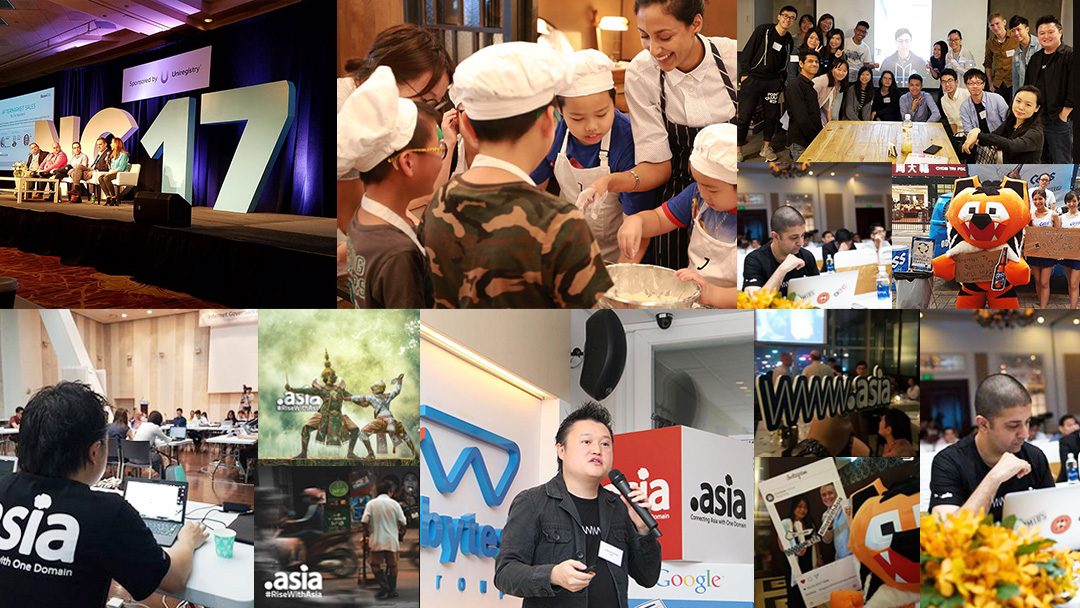
DotAsia’s best moments of 2017
2017 has been a fun and fruitful year for .Asia, Ajitora, and our Go.Asia team. The .Asia registry updated its Charter Eligibility Requirement Policies to accept registrations from registrants living outside of the Asia. We attended the worlds biggest domain name conference, worked with the UN to help advocate the SDGs, and played a key part in educating the locals on food health. We also celebrated our 10th year anniversary with a big party! Read on to check out some of .Asia’s best moments of 2017.
Top 10: .Asia domains
Over the years there have been numerous exciting .Asia domains set up. One of the earliest examples was Johnny Walker’s KeepWalking.Asia as part of an Asia wide TV and online campaign in 2008. Even though the domain is no longer operational, it inspired our continued tracking of live .Asia websites through the KeepClicking.Asia initiative, now integrated with our main site and social media page: http://www.facebook.asia/dot.asia.
Here are my Top 10 picks (at the moment… as it certainly changes all the time) of high traffic .Asia domains that exemplify or showcase how .Asia domains can be used.
Top 10: eSports teams
Claiming the World Championship titles in 2013, 2015, 2016 and now among favourites for 2017, SKT is all too obvious as the choice for top spot. While they suffered from a slump in 2014, SKT’s star player Faker, argued by some to be the most dominant player of all time has stayed with the team throughout his dazzling career. SKT have already forged a lasting legend for themselves; winning this season’s championship would only push it to the next level.